
September 15, 2026 · Buying Farmland
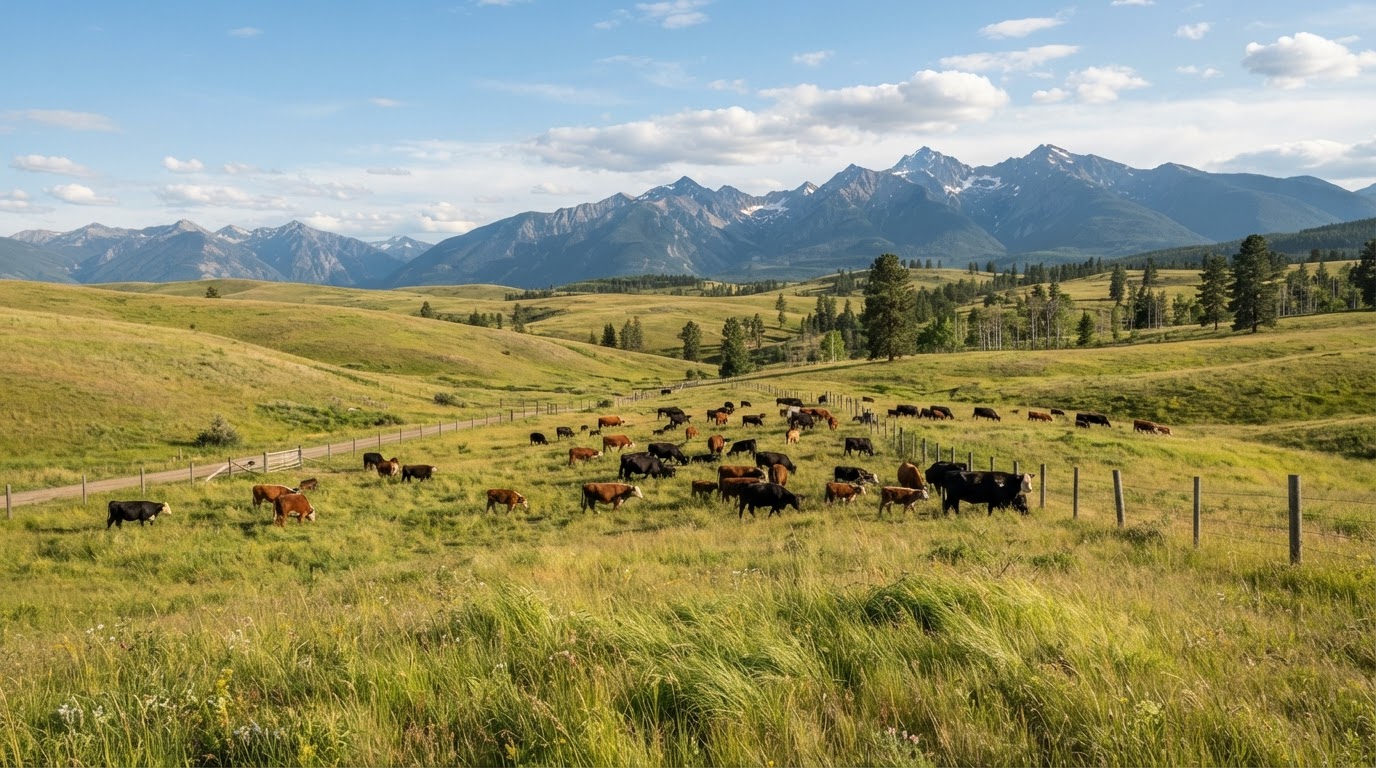
A cattle ranch is valued very differently from cultivated farmland. The key metric is not acreage alone but carrying capacity — the number of animals the land can sustainably support. Two ranches of identical size can have very different carrying capacities depending on forage quality, water, climate and grazing tenure. Understanding carrying capacity is the foundation of evaluating any BC ranch, from the Interior to the Cariboo and the north.
BC ranchland spans a wide range of environments, from the more accessible Thompson-Shuswap to the remote Cariboo and Northern BC. See our Ranches for Sale page for an overview of BC ranch properties.
What is carrying capacity?
Carrying capacity is the number of livestock a given area of land can support over a grazing season without degrading the forage resource. It is usually expressed in animal units per month (AUMs) or animal units per section. Carrying capacity depends on the productivity of the forage, which in turn depends on soil, climate, precipitation, elevation, slope and management history.
A ranch with high carrying capacity can run more cattle on the same acreage, generating more revenue. A ranch with low carrying capacity needs more land to support the same number of animals — or fewer animals on the same land. This is why acreage alone is a poor measure of ranch value: 1,000 acres of productive grassland may be worth more than 5,000 acres of overgrazed, dry range.
The factors that determine carrying capacity
| Factor | Why it matters |
|---|---|
| Forage productivity | The amount and quality of grass and browse the land produces — the foundation of carrying capacity. |
| Water for livestock | Stock water — wells, creeks, dugouts — determines where animals can graze; without it, forage is inaccessible. |
| Climate & precipitation | Rainfall and growing-season length directly affect forage regrowth and annual productivity. |
| Elevation & slope | Higher elevation and steep slope reduce the grazing season and accessibility of forage. |
| Soil & range condition | Overgrazed or eroded range has lower productivity and may need years of rest to recover. |
| Management history | A well-managed ranch with rotational grazing maintains forage; a poorly managed one degrades it. |
Crown grazing tenure: the other half of the ranch
Many BC ranches rely on Crown grazing tenures — agreements that allow the rancher to graze livestock on public land — in addition to their deeded (private) acreage. For some Interior and Northern ranches, the Crown tenure is as important to the operation as the deeded land, because it extends the grazing season and increases the total carrying capacity of the operation.
Crown grazing tenures are held by the rancher, not the land, and their transfer to a new owner is subject to provincial approval. A buyer should confirm whether a tenure exists, its terms, its AUM allocation, and whether it will transfer with the sale. Do not assume that a Crown grazing agreement automatically moves to the new owner — confirm the transfer process with the relevant provincial authority and build it into the transaction timeline.
Deeded land vs. Crown tenure
Deeded land is private property owned outright. Crown grazing tenure is a right to use public land for grazing, held under agreement with the province. A ranch's total carrying capacity may depend on both — but only the deeded land transfers with the property as real estate. The tenure transfer is a separate process that requires provincial approval.
Water for livestock: the limiting factor
On rangeland, water for livestock is often the limiting factor on carrying capacity — not forage. If animals cannot reach water, they cannot graze the forage around it. A ranch with good forage but poor stock-water distribution may have a lower effective carrying capacity than the forage alone suggests. Buyers should map water sources — wells, springs, creeks, dugouts — and assess their reliability, especially in dry years.
Stock water and irrigation water are different concerns. See our Water Rights & Irrigation guide for the broader BC water framework, but understand that on a ranch, the priority is livestock access to water across the grazing area, not just a single licensed source.
Evaluating a ranch: the practical checklist
- 1Determine the deeded acreage and the Crown grazing tenure AUMs separately.
- 2Assess the forage condition — is the range healthy, overgrazed, or recovering?
- 3Map stock-water sources and assess their reliability across the property.
- 4Confirm whether Crown grazing tenure transfers with the sale and on what terms.
- 5Review the carrying capacity history — how many cattle has the ranch run, and is that sustainable?
- 6Check ALR status, access roads, fencing condition and any environmental designations.
- 7Consider a professional range assessment by a qualified agrologist for a high-value purchase.
A ranch purchase is a decision about biological productivity, not just real estate. The Due Diligence Checklist provides the broader framework, but ranch buyers should go deeper on carrying capacity, water and tenure — these are the factors that determine whether the operation is viable.
Important: This information is educational only and is not legal, tax, financial or regulatory advice. ALR rules, water licensing, zoning and farm-classification requirements can change and depend on your specific property and circumstances. Always verify with the relevant BC authorities and qualified professionals before making decisions.
Frequently Asked Questions
- What is ranch carrying capacity?
- Carrying capacity is the number of livestock a given area of land can sustainably support over a grazing season without degrading the forage resource, usually expressed in animal units per month (AUMs). It depends on forage productivity, water, climate, soil and management history. Two ranches of identical size can have very different carrying capacities.
- Does Crown grazing tenure transfer when I buy a BC ranch?
- Crown grazing tenures are held by the rancher, not the land, and their transfer to a new owner is subject to provincial approval. Do not assume a tenure automatically moves to the new owner. Confirm whether the tenure exists, its AUM allocation, its terms, and the transfer process with the relevant provincial authority before closing.
- Why is water important for ranch carrying capacity?
- On rangeland, water for livestock is often the limiting factor on carrying capacity — not forage. If animals cannot reach water, they cannot graze the forage around it. A ranch with good forage but poor stock-water distribution may have a lower effective carrying capacity than the forage alone suggests. Map water sources and assess their reliability.
- Is acreage a good measure of ranch value?
- No. Acreage alone is a poor measure of ranch value because carrying capacity varies widely. 1,000 acres of productive grassland may be worth more than 5,000 acres of overgrazed, dry range. Value sits in the land's ability to sustain livestock — its forage, water and tenure — not in raw size.
- What should I check before buying a BC cattle ranch?
- Determine deeded acreage and Crown grazing AUMs separately, assess forage condition, map stock-water sources, confirm whether Crown tenure transfers, review the carrying capacity history, check ALR status and access, and consider a professional range assessment by a qualified agrologist for a high-value purchase.