
September 21, 2026 · Water Rights
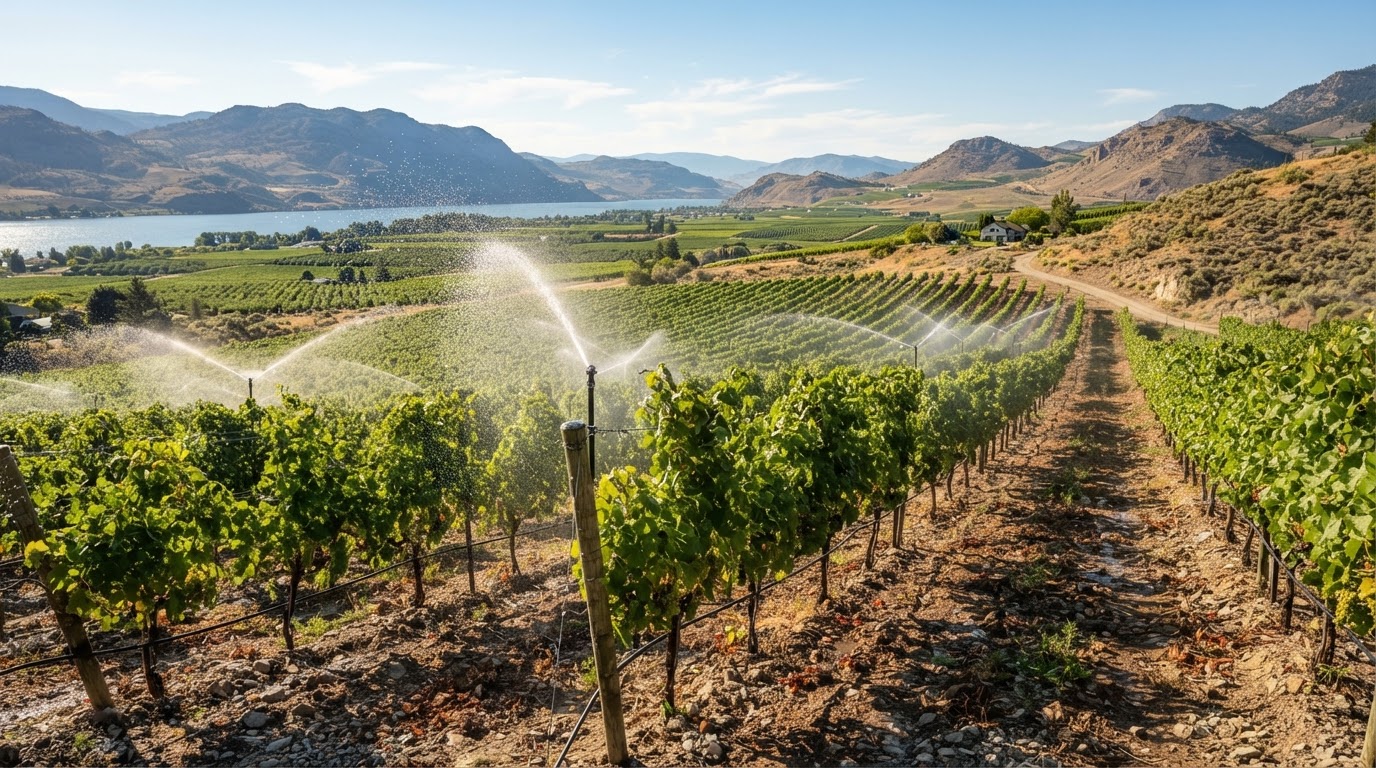
When you buy BC farmland, the water rights attached to the property are one of the most valuable — and most easily misunderstood — parts of the transaction. A water licence under the BC Water Sustainability Act generally attaches to the land rather than to the person who holds it, which means it can transfer with the property. But 'can transfer' is not the same as 'automatically transfers in good standing,' and the difference matters enormously in the Okanagan, the Interior, and anywhere irrigation defines what the land is worth.
On irrigation-dependent farmland, water is often worth more than the soil. A parcel with a secure, licensed irrigation allocation can be worth far more than identical acreage without one. Understanding how water licences transfer — and what can go wrong — is a core part of Water Rights & Irrigation due diligence.
Do water licences transfer automatically with the land?
In principle, a water licence appurtenant to (attached to) a specific parcel of land transfers with that land when it is sold. The new owner steps into the shoes of the previous licensee. However, the licence must be in good standing — fees paid, conditions met, and no enforcement action pending — for the transfer to carry real value. A licence that has lapsed, been suspended, or is under review may not provide the water security the buyer expects.
The buyer should also confirm that the licence is properly registered to the parcel in the BC Water Rights database. In some cases, licences have been historically attached to a property but not formally updated after ownership changes, creating a gap between what the seller believes and what the official record shows.
What to verify before closing
- 1Confirm the licence exists and is registered to the parcel in the BC Water Rights database.
- 2Check the licence status — active, in good standing, not suspended or under review.
- 3Verify the annual allocation volume and whether it matches the acreage you intend to irrigate.
- 4Confirm the authorised purpose — irrigation, livestock, domestic — matches your intended use.
- 5Review any conditions, such as minimum stream flow requirements or seasonal restrictions.
- 6Confirm that water rental fees (the annual charge for using licensed water) are paid and current.
- 7Check whether the licence is held by an irrigation district or water users' community, which has its own rules.
Groundwater licensing: a newer layer
Under the Water Sustainability Act, groundwater licensing is now required in BC for many uses that were previously unregulated. If the farm relies on wells for irrigation or livestock watering beyond a domestic exemption, the buyer should confirm whether a groundwater licence is in place, in good standing, and sufficient for the intended operation. Historical well use does not guarantee a current licence, and aquifer conditions can change over time.
Irrigation districts are different
If the property receives water through an irrigation district or water users' community, the water right may be tied to membership or shares in that organisation rather than to a standalone licence. Transferring that water to a new owner involves the district's own process, and the buyer should confirm the allocation and any transfer requirements directly with the district before closing.
What can go wrong
The most common water-rights problems in farmland transactions are: a licence that has lapsed because fees were not paid; an allocation that is smaller than the buyer assumed; a purpose restriction that does not cover the buyer's intended crop; and unlicensed groundwater use that the buyer inherits as a compliance risk. Each of these can turn a productive farm into a marginal one, so a water-rights review should be a condition of any offer on irrigation-dependent land.
Treat water verification as seriously as title review. The Due Diligence Checklist includes water as a standalone item because, on many BC farms, it is the asset that makes or breaks the operation.
Important: This information is educational only and is not legal, tax, financial or regulatory advice. ALR rules, water licensing, zoning and farm-classification requirements can change and depend on your specific property and circumstances. Always verify with the relevant BC authorities and qualified professionals before making decisions.
Frequently Asked Questions
- Does a BC water licence transfer to the new owner automatically?
- A water licence appurtenant to the land generally transfers with the property, but it must be in good standing — fees paid and no enforcement action — to carry real value. The buyer should confirm the licence is registered to the parcel, active, and sufficient for the intended use before closing. Treat a water-rights review as a condition of your offer on irrigation-dependent land.
- Do I need a groundwater licence for a farm well in BC?
- Under the Water Sustainability Act, groundwater licensing is required for many non-domestic uses in BC, including irrigation and livestock watering beyond a domestic exemption. Historical well use does not guarantee a current licence. Confirm whether a groundwater licence exists, is in good standing, and matches your intended operation before relying on well water.
- What is the difference between a water licence and irrigation district water?
- A water licence is a standalone right held against a specific water source and parcel. Irrigation district water is tied to membership or shares in a district or water users' community, which has its own allocation and transfer process. If your farm receives district water, confirm the allocation and transfer requirements directly with the district before closing.
- What happens if a farm's water licence has lapsed?
- A lapsed licence may no longer provide a legal right to use the water, which can severely reduce the farm's productivity and value. The buyer may need to apply for a new licence, which is not guaranteed and can take considerable time. Always check licence status in the BC Water Rights database and confirm fees are current before relying on licensed water.
- Should I make my offer conditional on water rights verification?
- On irrigation-dependent farmland — especially in the Okanagan and Interior — yes. A water-rights condition lets you confirm the licence exists, is in good standing, and matches your intended use before you are committed. This is one of the most important conditions in a BC farmland purchase.