
Northern BC, British Columbia
Fort St. John Farms for Sale
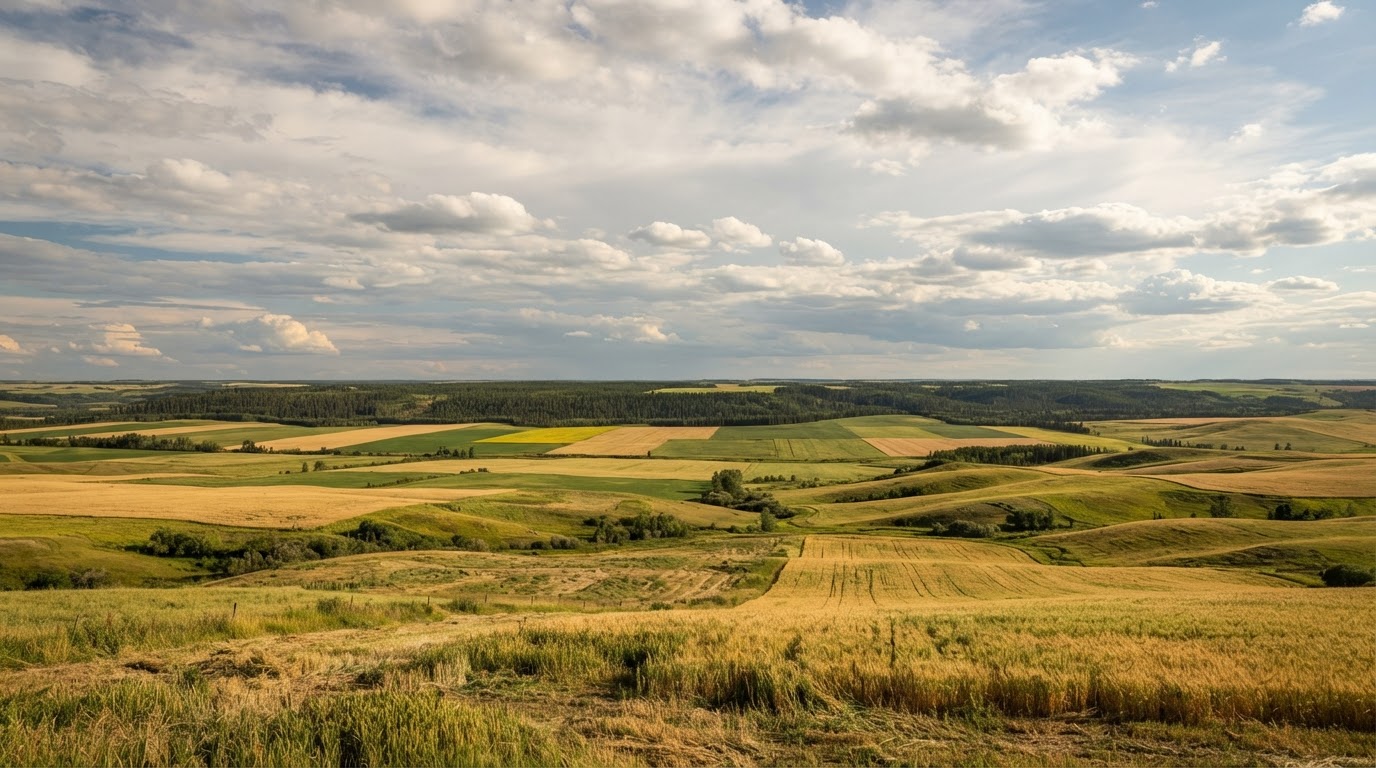
Peace River country — grain, oilseed, forage and cattle operations on some of BC's most productive large-scale northern farmland, where water and the short season shape value.
Current Fort St. John Farmland Listings
Live agricultural properties in Fort St. John from the REALTOR.ca DDF® National Shared Pool
Key facts about Fort St. John farmland
Regional benchmarks for the Peace River & Northern BC. Sourced from BC ALC Service Plan & StatsCan Census of Agriculture 2021 (2021–2025). Figures are illustrative — verify current values with the source.
- Fort St. John sits in the Peace River & Northern BC, where typical farmland trades at $1,200 – $4,500 / acre.
- The Peace River & Northern BC contains approximately 5,189,100 acres of Agricultural Land Reserve land (45% of BC's total ALR).
- The 2021 Census of Agriculture counted 1,540 farms in the Peace River & Northern BC.
- Dominant agriculture in the Peace River & Northern BC: Grain & Oilseeds (Canola, Wheat, Oats, Barley), Forage Seed, Bison & Cattle.
- Soil capability in the region: CLI Class 2 – 4 (Degraded black and dark gray chernozemic soils).
- Primary water sources: Peace River tributaries, dugout storage systems, natural precipitation.
Source: BC ALC Service Plan & StatsCan Census of Agriculture 2021.
How Fort St. John Compares to Neighbouring Communities
Fort St. John differs from neighbouring northern communities in the scale and crop mix of the Peace River region. Compared to Prince George, it is more grain- and oilseed-oriented on larger-scale prairie cropland; compared to Dawson Creek, it shares the same Peace River character as the region's primary service hub. Its large-scale grain character makes equipment and storage infrastructure central due-diligence items in a way the forage-and-cattle north does not face.
Find Fort St. John Farms for Sale
New agricultural and rural properties come available in Fort St. John regularly. Share what you're looking for and we'll match current and upcoming Fort St. John listings to your criteria — and notify you as new farms hit the market.
- Soil & land
- Peace River prairie soils — among BC's most productive large-scale northern cropland for grain, oilseed and forage.
- Farm types
- Grain, oilseed (canola), forage, hay and cattle operations.
- Water
- Verify water licences and well records — the short season and moisture variability matter.
Request current Fort St. John farmland listings
Tell us your acreage, farm type and budget. We'll match current and upcoming Fort St. John listings to your criteria and notify you as new farms hit the market.
Request Fort St. John ListingsConfidential, no obligation. Reviewed by a BC agricultural real estate specialist.
About Farming in Fort St. John
Fort St. John sits in the Peace River region of northeastern British Columbia, which holds some of the province's most productive large-scale northern cropland. Unlike the forage-and-cattle character of much of the north, the Peace River supports grain, oilseed (notably canola), forage and cattle operations on prairie soils with a longer season than the central plateau. Much of the agricultural land is within the Agricultural Land Reserve.
The Peace River's scale is what distinguishes it. Farms here operate on large acreages suited to mechanised grain and oilseed production, which is unusual in BC where most agriculture is smaller-scale and intensive. That scale brings different due-diligence priorities: equipment value, storage and handling infrastructure, and moisture variability across a short but productive season matter as much as the land itself.
Water and the short season remain constraints. Verify water licences under the Water Sustainability Act and well records, and understand that moisture variability can sharply affect yield year to year. For cattle operations, confirm stock water and any Crown grazing tenure, which is administered separately from the deeded land and is not guaranteed to transfer.
The Peace River region's grain-and-oilseed character makes it distinct within northern BC. See the Northern BC region overview for how Fort St. John compares to Dawson Creek and Prince George.
Soil & farmland
Peace River prairie soils — among BC's most productive large-scale northern cropland for grain, oilseed and forage.
Farm types
Grain, oilseed (canola), forage, hay and cattle operations.
Water & irrigation
Verify water licences and well records — the short season and moisture variability matter.
Why buyers look here
Some of BC's most productive large-scale northern cropland in the Peace River region.
ALR & zoning in Fort St. John
Fort St. John is part of the Northern BC agricultural region. When evaluating farmland here, confirm whether a parcel is in the Agricultural Land Reserve, review local zoning, and verify water rights — these factors shape what the land can be used for and what it's worth.
Important: This information is educational only and is not legal, tax or regulatory advice. ALR status, zoning and water rules can change and depend on the specific parcel — always verify with the relevant BC authorities and qualified professionals.
What to Check Before Buying a Farm in Fort St. John
Farmland due diligence goes beyond a standard home inspection. These are theFort St. John-specific items to verify before making an offer — treat each as a condition of your offer where appropriate.
- Verify water licences, well records and any irrigation rights — moisture variability matters.
- For grain and oilseed, assess equipment, storage and handling infrastructure value.
- Confirm ALR status on the ALC portal and whether further subdivision is permitted.
- For cattle, confirm stock water and the transferability of any Crown grazing tenure.
- Assess productive versus total acreage and soil capability for the intended crop.
- Review year-round access for large rural parcels.
- Clarify what is deeded land versus Crown tenure or leased range.
Explore the Northern BC region
Fort St. John is part of a broader BC agricultural region. Understanding the regional soil, water and ALR character helps you compare farms across communities and farm types.
Fort St. John farms by type
Explore Fort St. John farmland by the type of operation — each page covers the local soil, water, ALR and due-diligence context specific to that farm type in Fort St. John.
Fort St. John Farm Buying — Frequently Asked Questions
- What makes the Peace River region different from the rest of northern BC?
- The Peace River region around Fort St. John and Dawson Creek holds some of BC's most productive large-scale northern cropland, supporting grain, oilseed (canola), forage and cattle on prairie soils. Most of northern BC is forage- and cattle-oriented, but the Peace supports mechanised grain and oilseed production at a scale unusual in BC.
- What grows well around Fort St. John?
- The Peace River region supports grain, oilseed (notably canola), forage and hay, plus cattle operations. The prairie soils and longer season than the central plateau make large-scale grain and oilseed production viable, though moisture variability across the short season can affect yield.
- Is water a concern on Peace River farmland?
- Moisture variability is a real concern across the short but productive season. Verify water licences under the BC Water Sustainability Act and well records before buying, and understand that yield can vary sharply year to year with moisture.
- How does Fort St. John compare to Dawson Creek or Prince George?
- Fort St. John and Dawson Creek share the Peace River's grain, oilseed and forage character on large-scale prairie cropland. Compared to Prince George, they are more grain-oriented and operate at larger scale, while Prince George is more forage- and cattle-focused on the central plateau with better regional services.
- What should I check when buying a Peace River grain farm?
- Verify water rights and well records, then assess equipment, storage and handling infrastructure value, which can be substantial on a grain operation. Confirm ALR status and subdivision rules, and review soil capability and moisture variability for the intended crop.
Compare with other BC regions
Fort St. John sits in the Northern BC. BC's other agricultural regions offer different soil, water, climate and price points — useful if you're weighing where to buy.
More Northern BC Farm Areas
Compare Fort St. John with neighbouring agricultural communities across the Northern BC region.
Speak with a Fort St. John agricultural specialist
Whether you're buying or selling farmland in Fort St. John, the first step is understanding what the property is worth in the current market. Request a confidential, no-obligation review — I'll assess water rights, ALR status, soil capability and improvements and give you an honest assessment.
- Confidential and no obligation
- Reviewed by a BC agricultural real estate specialist
- Honest assessment, not a sales pitch
Request Fort St. John farm information
Tell us what you're looking for in Fort St. John.
Selling a farm in Fort St. John?
See seller-specific guidance — value drivers, buyer pool and preparation steps for Fort St. John farmland.
Find or sell your Fort St. John farm
From ALR and water-rights questions to current Fort St. John listings and a free farm evaluation, get clear guidance from a specialist who knows Northern BC agricultural land.