
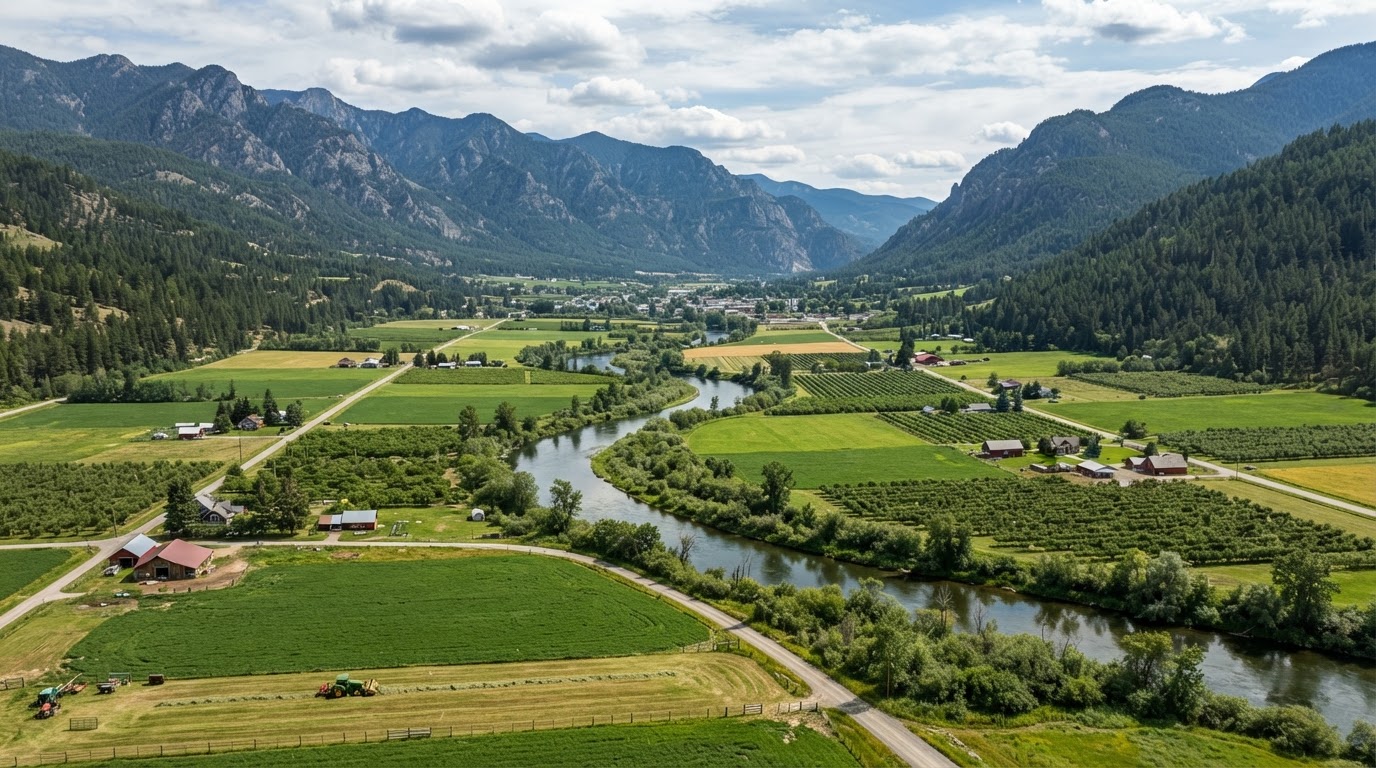
Orchards & Tree Fruit Farms for Sale in Grand Forks
Grand Forks sits in the Boundary region, where a warm valley climate supports a distinct tree-fruit community separate from the Okanagan. Buying a Grand Forks orchard means verifying licensed irrigation water — the allocation sets the productive ceiling — plus tree age and variety, frost risk and any packing facilities.
Why Grand Forks
Orchards & Tree Fruit in Grand Forks
Grand Forks' warm Boundary valley setting, distinct from the Okanagan, supports established apple and tree-fruit orchards, with a long local growing tradition on the valley floor.
What to Know Before Buying
Grand Forks' orchards sit in the Boundary region, a warm valley setting distinct from the Okanagan that supports apple and tree-fruit production with a long local growing tradition. The valley floor gives a genuine but smaller tree-fruit community, and as everywhere in BC's interior, production is irrigation-dependent — a Grand Forks orchard's licensed water allocation often determines how much land can be productively farmed.
Water on a Grand Forks orchard typically comes from a licensed surface source or well. The volume and priority of that allocation is a central factor in the property's value, because it determines how many acres can be productively farmed. Buyers must verify the licence status, allocation volume and authorised purpose under the Water Sustainability Act.
Orchards are long-lived capital plantings. Assess the age distribution, variety mix and vigour of the trees, and understand the replanting timeline. Many Grand Forks orchard properties include cool storage or packing facilities that may or may not transfer with the sale; clarify what is included and confirm ALR status and any direct-sales permissions for the parcel.
Due Diligence Checklist
- Verify the water licence status, allocation volume and authorised purpose under the Water Sustainability Act.
- Assess tree age distribution, variety mix and vigour.
- Evaluate site, aspect and frost air-drainage.
- Check whether cool storage or packing facilities transfer with the sale.
- Confirm ALR status and any direct-sales or agri-tourism permissions.
- Review soil capability and drainage for the valley parcel.
What Drives Value
Illustrative guidance only — actual value depends on the specific parcel, its condition, water, soil and current market. Not a formal valuation.
Frequently Asked Questions
How does a Grand Forks orchard differ from one in the Okanagan?
Grand Forks sits in the Boundary region, a warm valley setting distinct from the Okanagan, with a smaller but established tree-fruit community. Production is still irrigation-dependent. The due diligence is the same — verify water, tree age and variety, frost risk and any packing facilities.
Is water the most important factor when buying a Grand Forks orchard?
Water is among the most important factors. Boundary tree-fruit production is irrigation-dependent, and a parcel's licensed water allocation often determines how much land can be productively farmed. Verify water licences and allocation under the BC Water Sustainability Act before buying.
When do Grand Forks orchard trees need replanting?
Orchard trees are long-lived capital plantings, but commercial productivity declines with age and variety obsolescence. Assess the age distribution and variety mix, and understand the replanting timeline — a mature orchard nearing the end of its productive life may need significant reinvestment.
Do packing and storage facilities come with a Grand Forks orchard sale?
Cool storage and packing equipment may or may not be included. Clarify in the purchase agreement which assets transfer with the land — packing infrastructure can represent substantial value.
Related Resources
Looking for orchards & tree fruit in Grand Forks?
From Grand Forks orchards & tree fruit to other BC farm types, get expert guidance from a real estate professional who specializes in British Columbia agricultural land.