
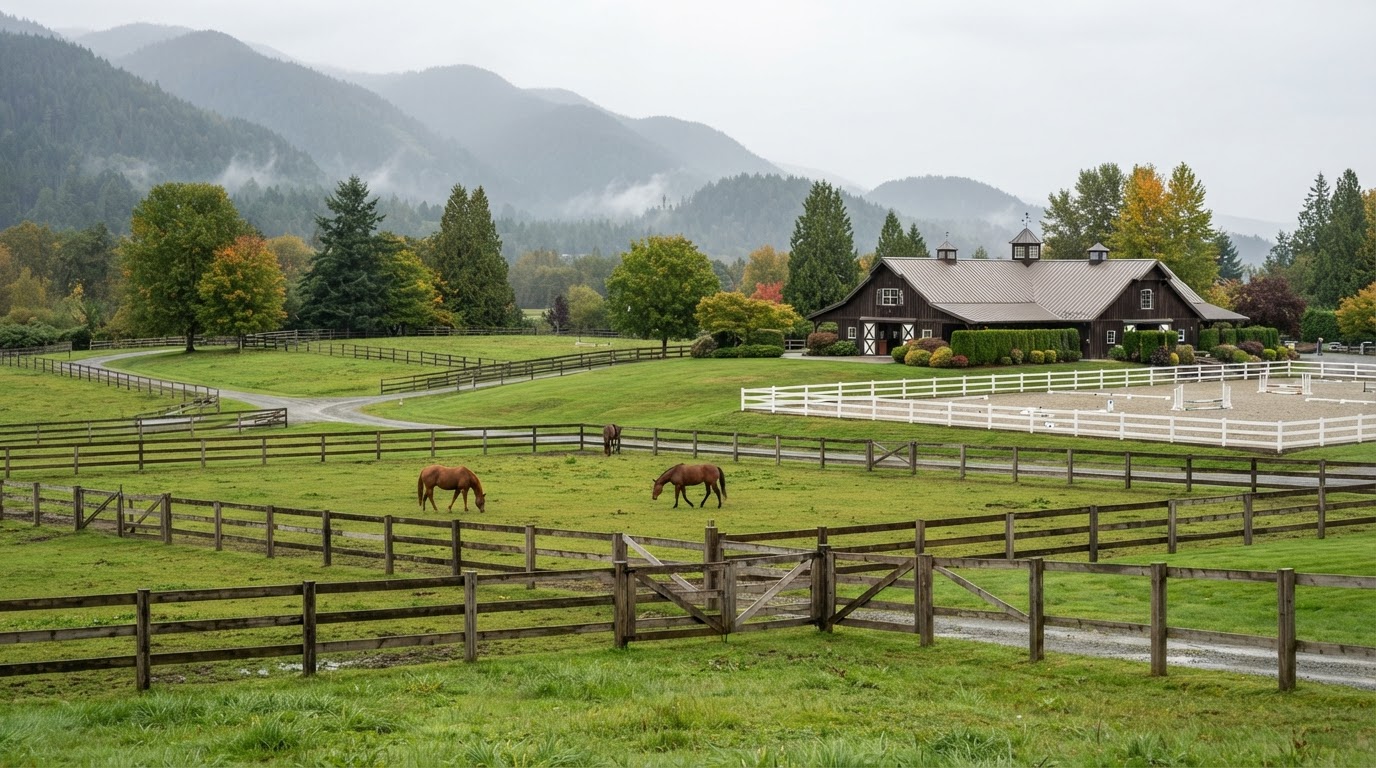
Equestrian Properties for Sale in Langley
Langley is BC's best-known horse country, with purpose-built equestrian properties featuring barns, indoor and outdoor arenas, paddocks and turnout. Buying a Langley equestrian property means assessing the specialised facilities — which are expensive to build and drive most of the value — plus usable turnout, fencing, footing, water and whether commercial boarding or training is permitted.
Why Langley
Equestrian Properties in Langley
Langley's concentration of purpose-built equestrian facilities, agricultural services and rural-acreage zoning makes it the centre of BC's horse industry, with the deepest cluster of barn-and-arena properties in the province.
What to Know Before Buying
Langley is the centre of BC's horse country, with the deepest concentration of purpose-built equestrian facilities in the province. An equestrian property here is judged on its barn, arena (indoor or outdoor), stalls, wash racks, tack areas, paddocks, fencing and turnout — these specialised improvements are expensive to construct and drive most of the property's value over bare acreage.
Usable turnout determines how many horses a Langley property can carry, not total parcel size. Buyers should assess pasture quality, drainage, paddock layout and the acres of safe, fenced turnout. Fencing type and condition, arena base and footing, and drainage all affect safety and value — a well-built arena with good footing and drainage is a capital asset; a poorly built one may need expensive reconstruction.
Many Langley equestrian parcels are in the Agricultural Land Reserve, and ALR rules apply regardless of parcel size. A personal-use horse property and a commercial boarding or training operation are treated differently, and both ALR rules and Township of Langley zoning can restrict commercial activity. Confirm permitted uses for the specific parcel before relying on a commercial operation, and verify reliable horse water and any manure-management or setback requirements.
Due Diligence Checklist
- Assess the barn, arena footing, stalls, wash racks and tack areas — equestrian improvements are specialised and expensive to build.
- Evaluate usable turnout — pasture quality, drainage, paddock layout and acres of safe, fenced turnout determine carrying capacity.
- Inspect fencing type and condition, arena base and footing, and drainage.
- Verify reliable water for horses and any manure-management or setback requirements.
- Confirm ALR status and Township of Langley zoning — especially whether commercial boarding or training is permitted.
- Check for any additional-residence restrictions if farm-help housing is needed.
- Review access, parking and any commercial-use permitting for a boarding or training operation.
What Drives Value
Illustrative guidance only — actual value depends on the specific parcel, its condition, water, soil and current market. Not a formal valuation.
Frequently Asked Questions
Can I run a commercial boarding stable on a Langley equestrian property?
It depends on the property's ALR status and Township of Langley zoning. A personal-use horse property and a commercial boarding or training operation are treated differently, and both ALR rules and municipal zoning can restrict commercial activity. Confirm permitted uses for the specific parcel before relying on a commercial operation.
What makes a Langley equestrian property valuable?
The facilities. A purpose-built barn, indoor or outdoor arena with proper footing, safe fencing and well-drained turnout are expensive to construct and drive most of an equestrian property's value over bare acreage. Assess the condition and specialisation of these improvements carefully.
How many horses can a Langley equestrian property carry?
That depends on the acres of safe, drained, fenced turnout — not the total parcel size. Pasture quality, drainage, paddock layout and fencing determine carrying capacity. Assess usable turnout rather than total acreage when judging how many horses a property can support.
Why does arena footing matter on a Langley equestrian property?
Arena base, footing material and drainage affect whether the arena is usable year-round and how safe it is for horses. A well-built arena with good footing and drainage is a capital asset that adds real value; a poorly built one may need expensive reconstruction.
Do ALR rules apply to Langley equestrian properties?
Yes. Many Langley equestrian parcels are in the ALR, and ALR rules apply regardless of parcel size. A horse property can still be subject to restrictions on non-farm use, subdivision, additional residences and commercial activity. Confirm the parcel's ALR status and what is permitted before buying.
Related Resources
Looking for equestrian properties in Langley?
From Langley equestrian properties to other BC farm types, get expert guidance from a real estate professional who specializes in British Columbia agricultural land.