
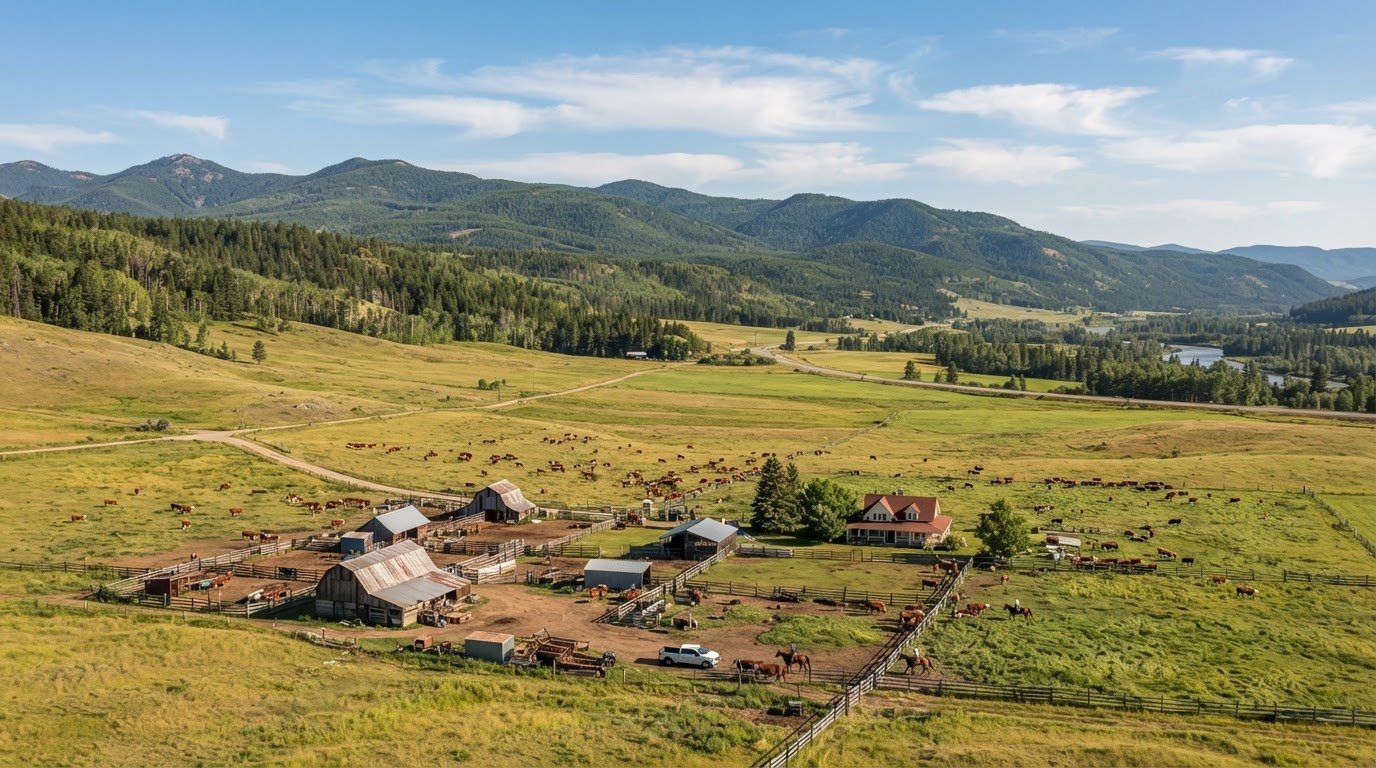
Ranches & Cattle Properties for Sale in Quesnel
Quesnel is a Cariboo ranching community, where cattle and forage operations combine deeded land, hay production and Crown grazing tenure. Buying a Quesnel ranch means verifying water for livestock, the status and transferability of grazing tenure, and the productive forage base — large acreage is not the same as productive acreage.
Why Quesnel
Ranches & Cattle in Quesnel
Quesnel's Cariboo grasslands and Crown range access make it a Cariboo cattle community, with operating ranches combining deeded forage land and grazing tenure.
What to Know Before Buying
Quesnel ranches operate in the Cariboo, where cattle and forage operations combine deeded land, hay production and Crown grazing tenure. The Interior climate makes water the key constraint — a large deeded acreage is worth little without secure stock water and irrigation for the forage base. Productivity is measured by carrying capacity, not by total acreage on paper.
Crown grazing tenure is central to most Quesnel ranches. Grazing agreements — range use permits and grazing leases — are administered separately from the deeded land and are not automatically guaranteed to transfer. A buyer should confirm the status, terms and transferability of any grazing tenure with the provincial range program before relying on it as part of the purchase.
Ranch value lies in the forage base and water infrastructure, not in raw acreage. Buyers should assess productive versus total acreage, irrigated hay land, soil capability, fencing, corrals, barns and year-round road access. ALR status matters too — ranch parcels are often large and further subdivision is tightly restricted by the Agricultural Land Commission.
Due Diligence Checklist
- Verify licensed water sources, wells and any range-water access.
- Confirm the status, terms and transferability of any Crown grazing tenure with the provincial range program.
- Assess productive versus total acreage — the forage base and carrying capacity.
- Evaluate irrigated hay land, soil capability and the condition of fencing, corrals and barns.
- Confirm year-round road access and proximity to markets, auction yards and supplies.
- Check ALR status and whether subdivision is permitted.
- Review any easements, rights of way or water-district obligations.
What Drives Value
Illustrative guidance only — actual value depends on the specific parcel, its condition, water, soil and current market. Not a formal valuation.
Frequently Asked Questions
Does Crown grazing tenure transfer with a Quesnel ranch sale?
Crown grazing agreements are administered separately from the deeded land and are not automatically guaranteed to transfer. A buyer should confirm the status, terms and transferability of any grazing tenure with the provincial range program before relying on it as part of the purchase.
How does a Quesnel ranch compare to one in Williams Lake?
Both are Cariboo cattle operations combining deeded land, hay and Crown grazing tenure. The due diligence is the same — verify water, grazing tenure transferability and the productive forage base rather than judging value by total acreage.
Why is water so important on a Quesnel ranch?
The Interior climate makes water the key constraint. A large deeded acreage is worth little without secure stock water and irrigation for the forage base. Verify licensed water sources, wells and any range-water access before buying.
Can a Quesnel ranch be subdivided?
ALR ranch parcels are often large and further subdivision is tightly restricted. Confirm ALR status and whether subdivision is permitted before buying with that expectation — fragmentation of agricultural land is controlled by the Agricultural Land Commission.
Related Resources
Looking for ranches & cattle in Quesnel?
From Quesnel ranches & cattle to other BC farm types, get expert guidance from a real estate professional who specializes in British Columbia agricultural land.