
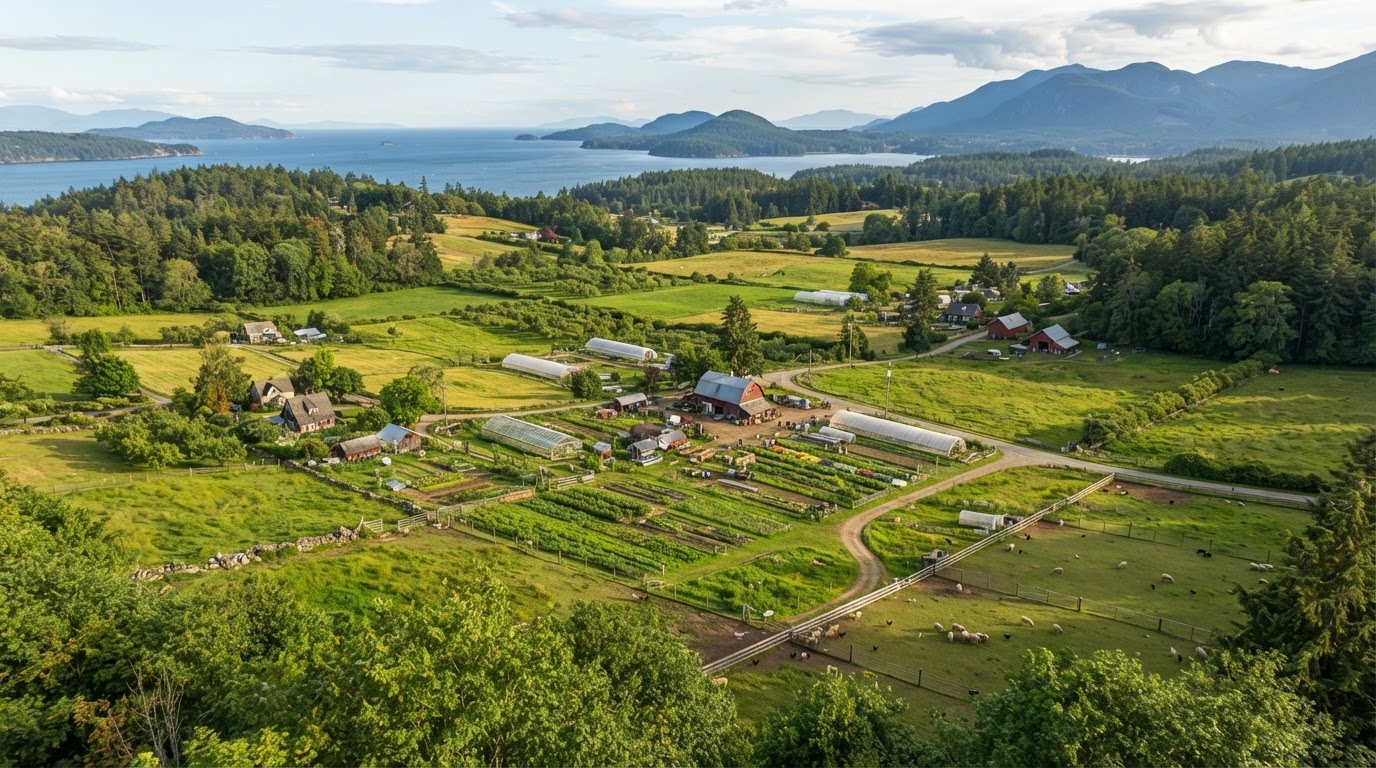
Hobby Farms & Rural Acreages for Sale on Salt Spring Island
Salt Spring Island is the largest of BC's Gulf Islands and a well-known small-farming community, where rural acreages and hobby farms sit on ALR and rural-zoned land. Buying a Salt Spring hobby farm means checking ALR status, well water, island access and services, and the hidden costs of outbuildings — a small acreage is still agricultural land, and ALR rules apply regardless of size.
Why Salt Spring Island
Hobby Farms & Acreages in Salt Spring Island
Salt Spring Island's mild Gulf Islands climate, established small-farming community and rural-acreage zoning make it a sought-after hobby-farm and lifestyle destination in the Salish Sea.
What to Know Before Buying
Salt Spring Island's hobby farms and rural acreages sit on ALR and rural-zoned land across the island, supported by a mild Gulf Islands climate and a well-established small-farming community. The setting is attractive, but island parcels rely heavily on wells and catchment — so verifying the well record, capacity and any water-sharing arrangements is a central step in any Salt Spring hobby-farm purchase.
A small acreage is not exempt from ALR rules. Salt Spring hobby farms can still be subject to restrictions on non-farm use, subdivision and additional residences, and both ALR rules and Islands Trust zoning apply — the Islands Trust governs land use on the Gulf Islands and is often more restrictive than mainland zoning. Buyers hoping to add buildings, subdivide or run a non-farm use must confirm what is permitted for the specific parcel before buying with those expectations.
Island access and services define much of a Salt Spring hobby farm's real cost and logistics. Fencing, outbuildings, equipment, well and septic maintenance, and the difference between residential and farm insurance all apply, and ferry access adds a layer of cost and scheduling to any improvement or service. If you hope to benefit from Class 9 farm property classification, understand the production and gross farm income thresholds.
Due Diligence Checklist
- Confirm the parcel's ALR status on the ALC portal and review Islands Trust zoning — both apply, and the Islands Trust is often more restrictive.
- Verify the well record, capacity, catchment systems and any water-sharing arrangements — island parcels rely heavily on wells.
- Assess outbuildings, fencing, septic and well condition, and budget for upgrades.
- Factor ferry access and island service logistics into any improvement or operating cost.
- Check BC Assessment Class 9 farm classification status and thresholds if relying on farm tax.
- Review any additional-residence restrictions if you plan to build.
- Check for easements, rights of way, covenants or Islands Trust development permit requirements.
What Drives Value
Illustrative guidance only — actual value depends on the specific parcel, its condition, water, soil and current market. Not a formal valuation.
Frequently Asked Questions
Is a Salt Spring Island hobby farm exempt from ALR rules because it is small?
No. ALR rules apply to agricultural land regardless of parcel size. A Salt Spring hobby farm can still be subject to restrictions on non-farm use, subdivision and additional residences. Always confirm the parcel's ALR status and what is permitted before buying.
How does Islands Trust zoning affect a Salt Spring hobby farm?
The Islands Trust governs land use on the Gulf Islands and is often more restrictive than mainland zoning, with tighter controls on subdivision, additional residences and non-farm use. Both ALR rules and Islands Trust zoning apply, and the more restrictive governs — confirm what is permitted for the specific parcel before buying with building or subdivision expectations.
What water should I check on a Salt Spring hobby farm?
Island parcels rely heavily on wells and catchment, so verify the well record, capacity, any catchment systems and water-sharing arrangements before buying. An unverified or low-capacity well is a significant risk on an island — water affects both household use and any farming you plan.
Does ferry access affect a Salt Spring hobby farm's value?
Yes. Ferry access adds a layer of cost and scheduling to any improvement, service or operating expense, which affects the real economics of an island hobby farm. Factor ferry logistics into your budget and operating plan before buying.
Related Resources
Looking for hobby farms & acreages in Salt Spring Island?
From Salt Spring Island hobby farms & acreages to other BC farm types, get expert guidance from a real estate professional who specializes in British Columbia agricultural land.