
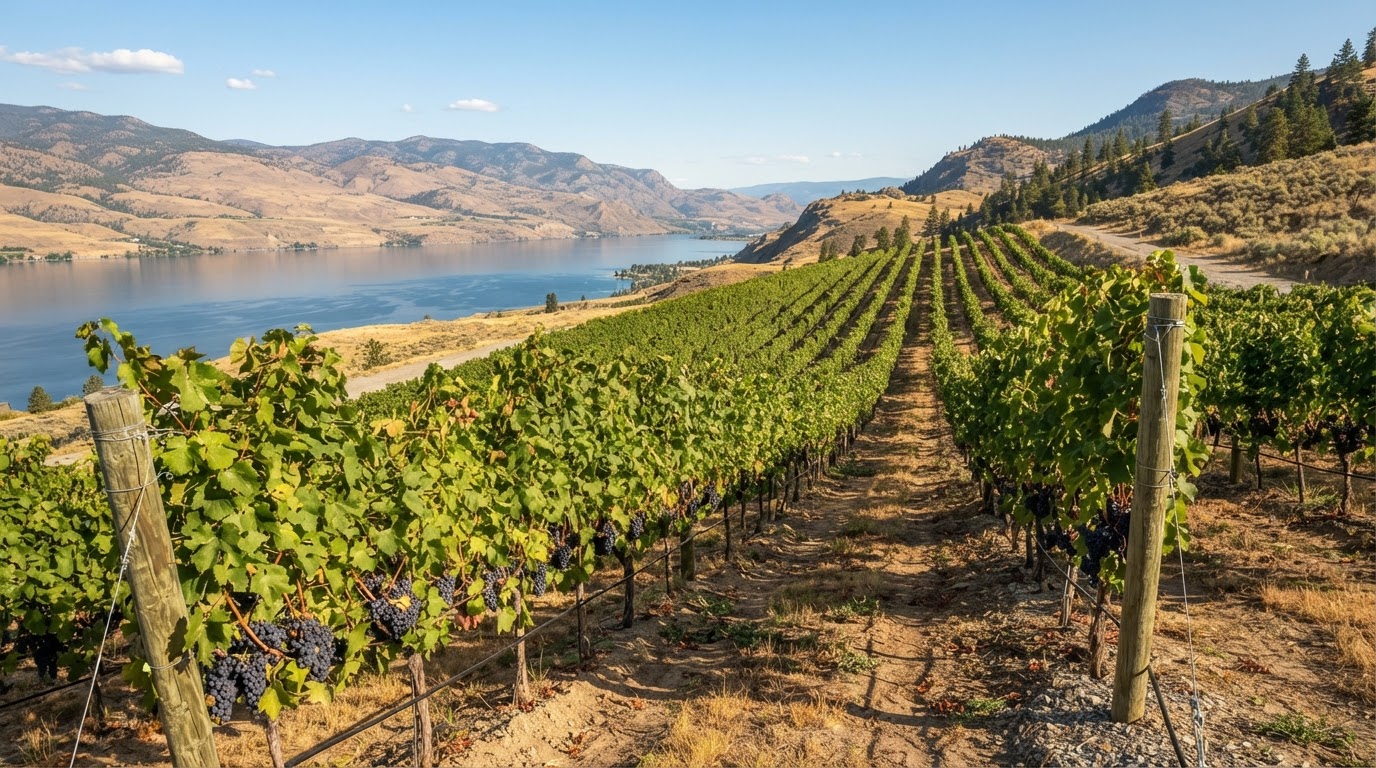
Sell a Farm in Lake Country
Selling a Lake Country farm means marketing orchards, vineyards and valley acreages in a growing North Okanagan community between Vernon and Kelowna — where irrigation-district water, established plantings and a valley setting define value. Lake Country's buyer pool is a mix of orchard operators consolidating benchland, small-scale winery investors and lifestyle buyers drawn to the valley's rural character within reach of both Kelowna and Vernon. A premium price depends on documented water, planting condition and clarity on what transfers.
What drives a premium price in Lake Country
These are the factors serious buyers and their lenders weigh when valuing agricultural property in Lake Country. Organising documentation for each before listing is the highest-value pre-sale step a seller can take.
- Irrigation-district water allocation and licensed irrigation rights.
- Tree-fruit or vine age, variety, condition and replanting timeline.
- Valley and benchland slope, aspect, drainage and frost-site quality.
- Established, producing plantings — worth more than bare land.
- ALR status and permitted direct-sale or agri-tourism uses.
Who buys farms in Lake Country
Understanding the realistic buyer pool helps position a property for the audience most likely to value it — and to close.
- Orchard operators consolidating or replanting on benchland.
- Small-scale winery and vineyard investors.
- Lifestyle buyers drawn to the valley setting between Kelowna and Vernon.
- Buyers valuing Lake Country's growing-community character.
What to prepare before listing in Lake Country
City-specific pre-sale steps that materially affect how quickly and at what level aLake Country farm sells.
- 1Verify and document irrigation-district allocation and all water licence documents.
- 2For orchards, document tree age, variety, condition and replanting timeline.
- 3For vineyards, document vine age, varietal mix, vine health and any replanting.
- 4Document valley and benchland slope, aspect, drainage and frost-site quality.
- 5Confirm ALR status and any permitted direct-sale or agri-tourism activity.
The Lake Country seller's edge
Lake Country's position between Kelowna and Vernon gives it a buyer pool that draws from both markets, but its North Okanagan water can be more constrained than around Kelowna — which makes irrigation documentation even more central to value. A parcel with documented, secure irrigation allocation commands a premium over one with uncertain water, and buyers assessing Lake Country properties scrutinise water rights before anything else, knowing the North Okanagan's limits.
How selling in Lake Country compares
Selling in Lake Country differs from Kelowna and Vernon because it bridges both markets with its own growing-community character. Compared to Kelowna, Lake Country is smaller-scale and less winery-industry-intensive but more affordable, attracting lifestyle and small-scale-production buyers; compared to Vernon, it is closer to Kelowna's buyer pool and more orchard- and vineyard-oriented. In all three, water documentation is central — but Lake Country's North Okanagan water constraints make it even more so.
Get a free farm valuation for your Lake Country property
If you're considering selling farmland in Lake Country, the first step is understanding what your property is worth in the current market. Request a confidential, no-obligation valuation — I'll review your water rights, ALR status, soil capability and improvements and give you an honest assessment.
- Confidential and no obligation
- Reviewed by a BC agricultural real estate specialist
- Honest assessment, not a sales pitch
Selling a farm in Lake Country — common questions
What do Lake Country farm buyers scrutinise most?
Water. North Okanagan water can be more constrained than around Kelowna, so buyers assessing Lake Country orchards, vineyards or valley acreages scrutinise irrigation-district allocation and water licence documents before anything else. A parcel with documented, secure irrigation allocation commands a premium over one with uncertain water. Verifying and documenting water before listing is the central pre-sale step.
How does selling in Lake Country compare to Kelowna?
Lake Country is smaller-scale and less winery-industry-intensive than Kelowna, but more affordable and closer to Vernon — attracting lifestyle and small-scale-production buyers alongside orchard operators. Its North Okanagan water can be more constrained, which makes irrigation documentation even more central to value. In both, water documentation is central, but Lake Country's constraints raise the stakes.
Should I document orchard or vine condition before selling a Lake Country farm?
Yes. Established plantings are long-lived capital, and buyers assess their remaining productive life and replanting needs carefully. Documenting tree or vine age, variety, condition and replanting timeline — alongside verified irrigation allocation — helps buyers understand what they are buying and supports a realistic price. Undocumented planting condition is a common reason Lake Country sales stall.
Related sell & buy resources
Sell a Farm in BC
The province-wide hub for selling BC agricultural property.
Sell a Farm in Okanagan
Regional context for selling Lake Country farmland.
Farms for Sale in Lake Country
See the buy side — current market activity in Lake Country.
Sell a farm in nearby communities
Sell by farm type in Lake Country
Ready to sell your Lake Country farm?
Get a confidential valuation and a clear plan to bring your property to market.