
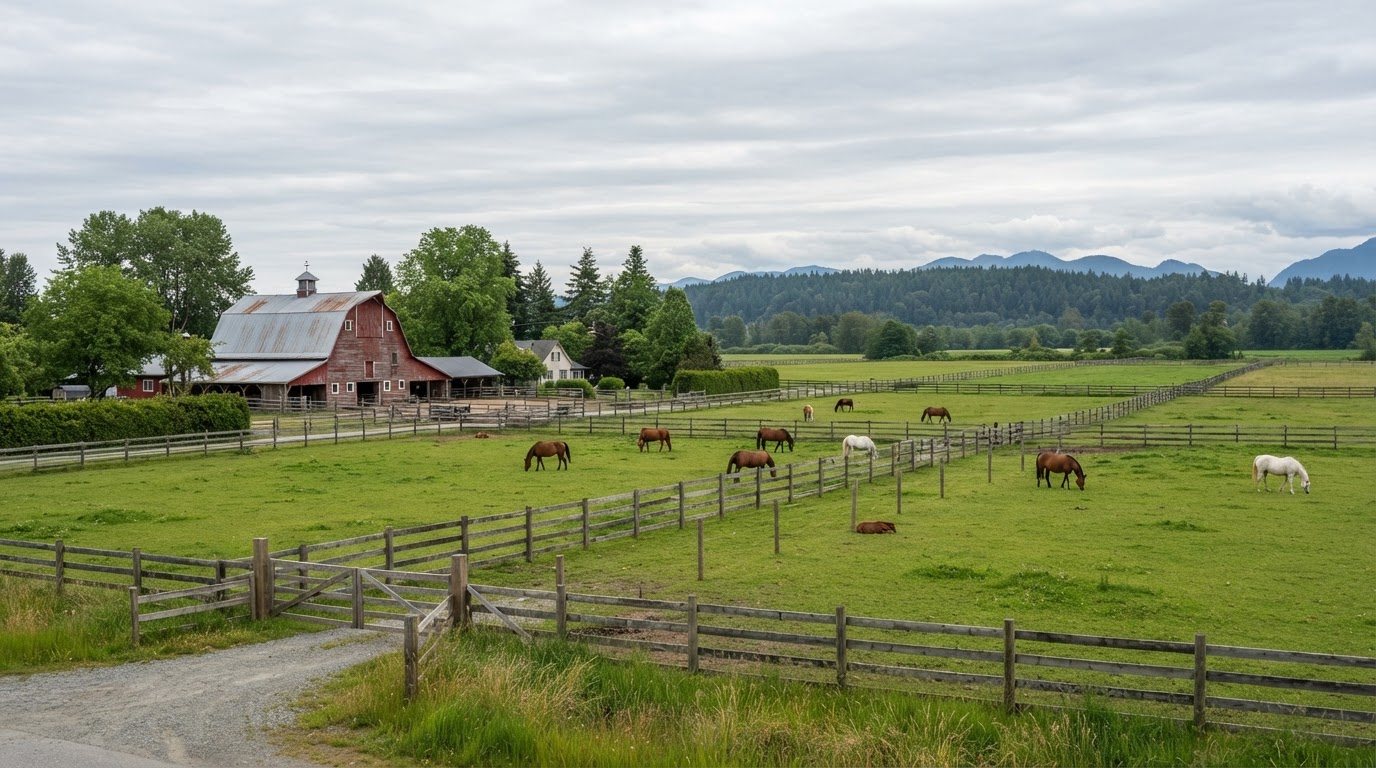
Greenhouse Properties for Sale in Surrey
Surrey is a centre of BC's greenhouse sector, with protected-agriculture operations growing vegetables, nursery stock and ornamentals. Buying a Surrey greenhouse means assessing structure condition and remaining life, energy source and contracts, water licences and whether crops, contracts and equipment are included — it is a business purchase as much as a real-estate purchase.
Why Surrey
Greenhouses in Surrey
Surrey's proximity to Metro Vancouver markets, energy infrastructure and mild climate make it a hub of BC's protected-agriculture sector, with the largest concentration of commercial greenhouse operations in the province.
What to Know Before Buying
Surrey's greenhouse operations grow vegetables, nursery stock and ornamentals under cover, using controlled-environment structures that make the buildings, heating and water as important as the land. The sector concentrates here because of proximity to urban markets, energy infrastructure and a mild climate — but a greenhouse is capital-intensive infrastructure, and its value lies largely in the condition and efficiency of that infrastructure.
Heating and lighting are typically the largest operating costs on a Surrey greenhouse. Buyers must understand the energy source (natural gas, biomass, electric), any supply contracts and the efficiency of the facility before buying — energy economics can make or break a greenhouse operation's profitability. Structure condition matters equally: glazing, heating and environmental-control systems have finite lifespans and significant replacement costs.
A Surrey greenhouse purchase is often both a real-estate and a business transaction. Growing crops, supply contracts and equipment are frequently separate from the real estate, and a sale can include the land, structures, crops, contracts and licences. Buyers should clearly separate real estate from business assets in the agreement and confirm what transfers with each. Verify water licences, well capacity and any recirculation systems, and review the property's permitting and compliance status.
Due Diligence Checklist
- Assess the age, condition and remaining life of greenhouse structures, glazing, heating and environmental-control systems.
- Understand the energy source, supply contracts and efficiency — heating and lighting are the largest operating costs.
- Verify water licences, well capacity and any recirculation or capture systems.
- Review the property's permitting and compliance status for structures, heating systems and discharges.
- Clarify whether growing crops, supply contracts and equipment are included or are separate business assets.
- Confirm ALR status and Surrey zoning — both apply, and the more restrictive governs.
- Assess proximity to markets and transport for distribution cost.
What Drives Value
Illustrative guidance only — actual value depends on the specific parcel, its condition, water, soil and current market. Not a formal valuation.
Frequently Asked Questions
Is a Surrey greenhouse purchase a real-estate deal or a business deal?
Often both. A greenhouse sale can include the real estate, structures and equipment, growing crops, supply contracts and licences. Buyers should clearly separate real estate from business assets in the agreement and confirm what transfers with each.
What's the biggest operating cost on a Surrey greenhouse?
Heating and lighting are typically the largest operating costs. Understand the energy source (natural gas, biomass, electric), any supply contracts and the efficiency of the facility before buying — energy economics can make or break a greenhouse operation's profitability.
How long do Surrey greenhouse structures last?
Greenhouse structures, glazing, heating and environmental-control systems have finite lifespans and significant replacement costs. Assess the age and condition carefully — a facility nearing the end of its useful life may need major reinvestment that materially affects value.
Are crops and equipment included in a Surrey greenhouse sale?
Not always. Growing crops, supply contracts and equipment are frequently separate from the real estate. Clarify in the purchase agreement exactly which business assets transfer with the land — transferable contracts add value, while excluded assets reduce it.
Does water matter on a Surrey greenhouse?
Yes. Greenhouse operations require reliable, licensed water, and many use recirculation or capture systems to reduce cost and regulatory exposure. Verify water licences, well capacity and the condition of any recirculation infrastructure before buying.
Related Resources
Looking for greenhouses in Surrey?
From Surrey greenhouses to other BC farm types, get expert guidance from a real estate professional who specializes in British Columbia agricultural land.