
September 17, 2026 · Farm Valuation
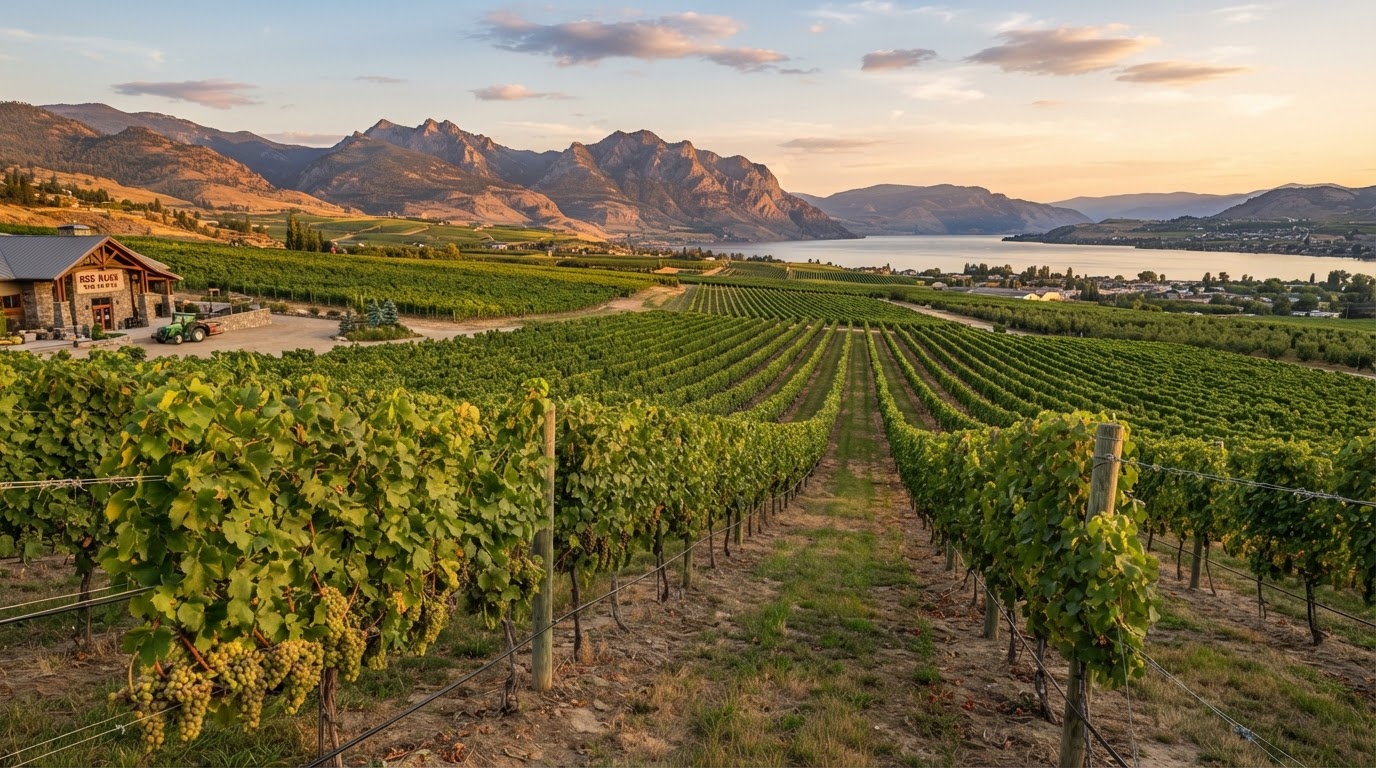
A vineyard is one of the most complex agricultural properties to value because it bundles several distinct assets into one parcel: the land itself, the established vines, the water rights that keep them alive, the infrastructure (fencing, trellising, irrigation, buildings), and sometimes a winery licence and brand. Unlike bare farmland, a vineyard's value depends heavily on the age and health of the planting, the grape varieties, and whether the property includes production and tasting-room facilities.
BC's wine regions — primarily the Okanagan and, to a lesser extent, Vancouver Island and the Fraser Valley — have distinct microclimates that shape what can be grown and where. A vineyard's location within these regions matters as much as the vines themselves. See our Vineyards for Sale page for an overview of BC wine-country farmland.
The core value drivers
Several factors interact to determine a vineyard's value. No single factor tells the whole story — a vineyard with excellent vines but no water security is a risk, while a vineyard with strong water but ageing, diseased vines may need costly replanting.
| Value driver | What it means for valuation |
|---|---|
| Vine age & health | Mature vines in production are worth more than young or diseased plantings; replanting is expensive and delays revenue. |
| Grape varieties | In-demand varieties for the region's climate carry more value than varieties the market has moved away from. |
| Water rights | Irrigation is essential in the Okanagan; a secure, licensed allocation is a core asset, not a detail. |
| Soil & site | Slope, aspect, drainage and soil type affect grape quality and thus the property's reputation and value. |
| Infrastructure | Trellising, irrigation systems, fencing, buildings and any winery production facilities add tangible value. |
| Licences & brand | A winery licence, tasting room and established brand can significantly increase value — but transferability varies. |
Vine age: the hidden timeline
Grapevines take several years to reach full production after planting, and a mature vineyard in its productive years is worth substantially more than a newly planted one. Conversely, a vineyard with ageing or diseased vines may face replanting costs that reduce its net value. A buyer should understand the age profile of the planting, the varieties, and the health of the vines — not just the acreage.
Replanting a vineyard is a significant capital investment with a multi-year payback period. If a property's vines are near the end of their productive life or affected by disease, the buyer is effectively purchasing land that will need reinvestment before it produces again. This is not necessarily a deal-breaker, but it must be reflected in the price.
Water: the non-negotiable
In the Okanagan, water is the single most important asset on a vineyard. Vines cannot produce quality grapes without reliable irrigation, and a vineyard's water licence — its annual allocation, purpose, and standing — is as central to the property's value as the vines themselves. A buyer who overlooks water verification is buying risk, not security. Review the Water Rights & Irrigation framework before valuing any Okanagan vineyard.
Winery licences and brand: what transfers?
If the property includes a winery licence, tasting room or established brand, these can add significant value — but their transferability depends on the specific licences, regulatory requirements, and how the business is structured. A winery licence is not automatically transferable to a new owner, and the brand, inventory and distribution relationships may be business assets separate from the real estate. Buyers should clarify what transfers with the property versus what is a separate business transaction, and seek professional advice on licence transfers.
Vineyard valuation is not residential valuation
A vineyard cannot be valued like a home. It is a productive agricultural asset whose value depends on biological, regulatory and operational factors that change over time. For a credible valuation, work with professionals who understand agricultural property — and treat any single 'price per acre' figure with caution, because it may not reflect the vineyard's actual productive capacity.
If you are considering selling a vineyard, the same factors apply in reverse: documenting vine health, water rights, infrastructure and any licences before listing is what supports a premium price. See our Farm Valuation guide for the broader valuation framework.
Important: This information is educational only and is not legal, tax, financial or regulatory advice. ALR rules, water licensing, zoning and farm-classification requirements can change and depend on your specific property and circumstances. Always verify with the relevant BC authorities and qualified professionals before making decisions.
Frequently Asked Questions
- What makes a BC vineyard valuable?
- A vineyard's value depends on the interaction of several factors: the age and health of the vines, the grape varieties, water rights (essential in the Okanagan), soil and site characteristics, infrastructure like trellising and irrigation, and any winery licences or brand. No single factor determines value — a vineyard with excellent vines but no water security is a risk.
- Do grapevine age and health affect vineyard value?
- Yes, significantly. Mature vines in full production are worth more than young or newly planted vines, because they generate revenue immediately. Conversely, ageing or diseased vines may require costly replanting with a multi-year payback period, which reduces the property's net value. Always assess the vine age profile before valuing a vineyard.
- Does a winery licence transfer to a new owner?
- Not automatically. A winery licence's transferability depends on the specific licence, regulatory requirements, and how the business is structured. The brand, inventory and distribution relationships may be business assets separate from the real estate. Buyers should clarify what transfers with the property versus what is a separate business transaction and seek professional advice.
- Why is water so important for Okanagan vineyard value?
- In the Okanagan's dry climate, vines cannot produce quality grapes without reliable irrigation. A vineyard's water licence — its annual allocation, authorised purpose and good standing — is as central to the property's value as the vines themselves. A buyer who overlooks water verification is buying risk, not security.
- Can I value a vineyard by price per acre?
- A single price-per-acre figure is unreliable for vineyards because it does not reflect the biological, regulatory and operational factors that determine productive capacity. Vine age, water rights, infrastructure, varieties and licences all affect value. Work with professionals who understand agricultural property for a credible valuation.