
British Columbia Agricultural Region
Metro Vancouver Farms for Sale
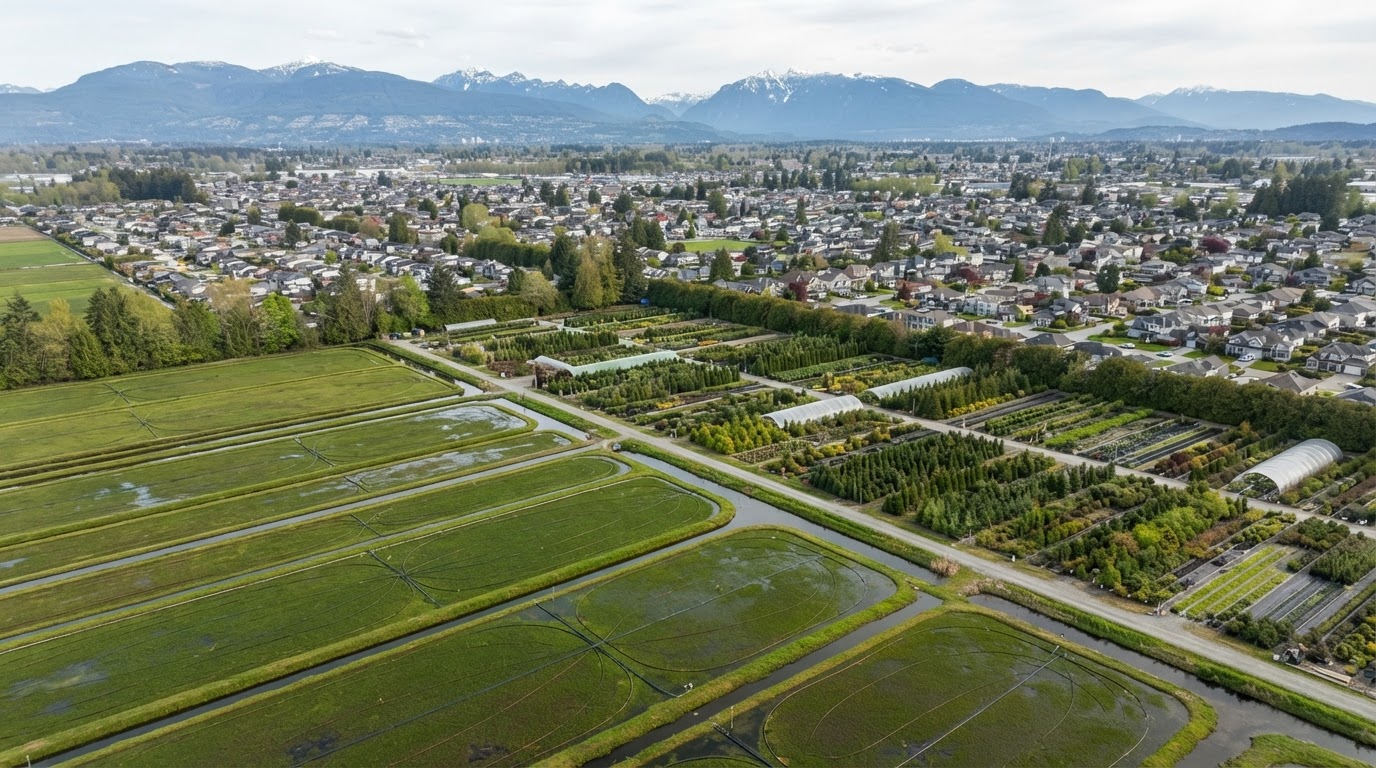
Metro Vancouver holds a limited but highly sought-after stock of ALR farmland inside an urban region — small-scale agriculture, nursery operations, cranberry and blueberry fields, and rare rural lifestyle parcels within minutes of the city. Urban-edge farmland trades on scarcity, ALR protection and proximity to markets more than on acreage.
Farming in the Metro Vancouver
Scarce, protected ALR farmland inside BC's largest urban market.
| Characteristic | Metro Vancouver |
|---|---|
| Soil capability | Rich alluvial and peat soils (e.g. Lulu Island) support high-value berry production; other Metro parcels are limited and vary sharply over short distances. |
| Primary water source | Municipal services and managed ditch systems; confirm whether agricultural water use is permitted on the specific parcel. |
| ALR & governance | Limited ALR land under intense development pressure; protected by the Agricultural Land Commission, with Metro Vancouver zoning layering additional restrictions. |
| Climate | The mildest climate in BC supports early-season and specialty crops; drainage and urban-edge conflict are the main constraints. |
ALR character
ALR land inside Metro Vancouver is limited and under intense development pressure, making the Reserve's protections especially significant. Non-farm use and subdivision are tightly controlled by the Agricultural Land Commission, and local zoning often layers additional restrictions.
Water regime
Many urban-edge parcels rely on municipal services or managed ditch systems. Verify whether agricultural water use is permitted on the specific parcel and any drainage obligations, particularly for lowland cranberry and blueberry operations.
Soil capability
Rich alluvial and peat soils (e.g. Lulu Island) support high-value berry production; other Metro parcels are limited and varied. Soil capability and drainage vary sharply over short distances.
Climate
The mildest climate in BC supports early-season and specialty crops, with the main constraints being drainage and urban-edge conflict rather than cold.
Farm economy
Cranberry, blueberry, market-garden, nursery and small-scale specialty operations, plus rare rural lifestyle parcels.
What drives farmland value here
- Scarcity of ALR land inside an urban region.
- Proximity to Metro Vancouver markets and consumers.
- Water/drainage rights and municipal service availability for agricultural use.
- ALR status and local zoning restrictions on non-farm use.
Metro Vancouver farmland market snapshot
Sourced from StatsCan Census of Agriculture 2021 & Farm Credit Canada (2021–2025). Illustrative benchmarks — verify current figures with the source before relying on them.
| Metric | Metro Vancouver |
|---|---|
| Typical acreage price | $150,000 – $300,000+ / acre |
| ALR land in region | 150,240 acres (1.3% of BC ALR) |
| Farms (Census 2021) | 1,720 |
| Dominant agriculture | Greenhouses, Vegetable Crops, Berries, Nursery & Equestrian |
| Soil capability | CLI Class 2 – 3 (Deltaic organic and heavy clay soils) |
| Primary water source | Fraser River delta intake, deep artesian wells, municipal agricultural water lines |
Driven by high-density glasshouse production (Delta/Richmond) and urban-fringe lifestyle demand.
What it costs to buy & start a farm in Metro Vancouver
Sourced cost breakdowns for the farm types that dominate the Metro Vancouver — land, water licensing, equipment and ongoing costs.
Berry Farms: cost to buy & start
What it costs to buy and establish a blueberry, raspberry or cranberry farm in BC — land, plants, drainage, ir…
See the cost breakdownGreenhouses: cost to buy & start
What it costs to buy and set up a greenhouse operation in BC — structures, heating/energy, water, permits and …
See the cost breakdownDue diligence in the Metro Vancouver
- Confirm ALR status and the local zoning bylaw — both apply, and the more restrictive governs.
- Verify whether agricultural water use is permitted on the specific parcel.
- Check for drainage and ditch obligations on lowland parcels.
- Review any urban-edge covenants, rights of way or development-pressure encumbrances.
Important: This information is educational only and is not legal, tax, financial or regulatory advice. ALR rules, water licensing, quota and zoning can change and depend on the specific property. Always verify with the relevant BC authorities and qualified professionals.
Looking for Metro Vancouver farmland?
Tell us your goals and we'll match current and upcoming Metro Vancouver listings to your criteria.
Or call 778-855-2019.
Consultation available in English, Punjabi (ਪੰਜਾਬੀ) and Hindi (हिन्दी).
Farms for sale in the region
Metro Vancouver farm areas
Crop & use types
Common farm types in the Metro Vancouver
Explore BC
Other BC agricultural regions
Fraser Valley
BC's most productive farmland within reach of Metro Vancouver markets, processors and the US border.
Okanagan
BC's premier wine and tree-fruit region, where water rights drive value.
Vancouver Island
A distinct island agricultural market with a mild maritime climate and its own zoning and water considerations.
Thompson-Shuswap
Interior ranch and forage country where water and grazing tenure define value.
Cariboo
Large-acreage central-interior ranch country where water and tenure drive value.
Northern BC
Vast northern ranch and rural acreage where access and water shape value.
Kootenay Boundary
Mountain-valley farmland where microclimate, water and valley soils shape value.
East Kootenay & Sea-to-Sky
Mountain ranch and lifestyle acreage where water, access and microclimate drive value.
Metro Vancouver farms by type
Explore Metro Vancouver farmland by the type of operation — each page covers the regional soil, water, ALR and due-diligence context specific to that farm type across Metro Vancouver.
Berry Farms in Metro Vancouver
Metro Vancouver holds a limited stock of ALR berry land inside an urban region — cranberry bogs on Lulu Island…
View Metro Vancouver berry farmsGreenhouses in Metro Vancouver
Metro Vancouver holds a limited stock of greenhouse operations on scarce urban-edge ALR land. These properties…
View Metro Vancouver greenhousesFrequently asked questions
Can Metro Vancouver ALR farmland be developed?
ALR land is protected from non-farm use, subdivision and exclusion by the Agricultural Land Commission, and Metro Vancouver zoning often adds further restrictions. Development is tightly controlled and exclusion is discretionary and not guaranteed — confirm the specific parcel's status before buying with development expectations.
Current Farmland Listings in Metro Vancouver
Live agricultural properties from the REALTOR.ca DDF® National Shared Pool
Find or sell your Metro Vancouver farm
Whether you're buying across the Metro Vancouver region or selling an established operation, get help with ALR, water rights, soil capability and a no-obligation farm evaluation.