
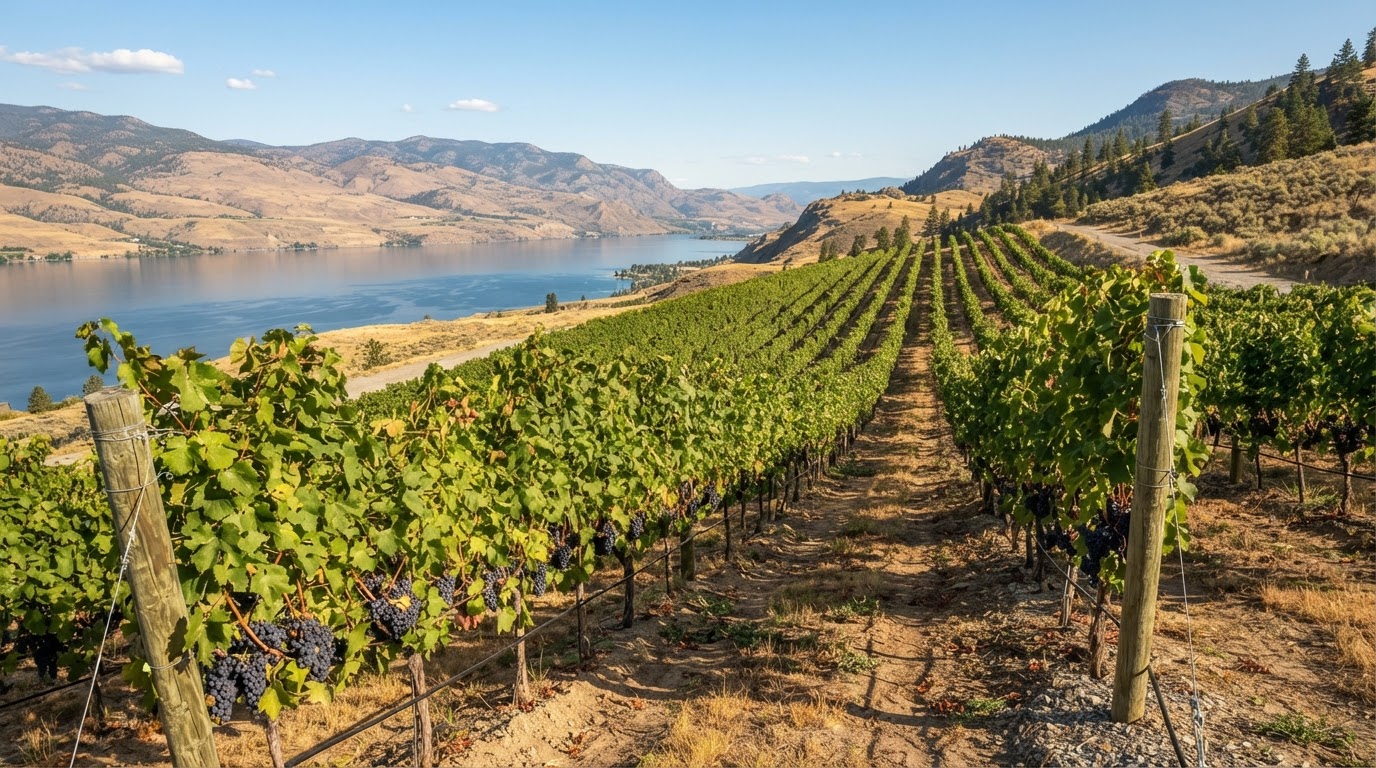
Vineyards for Sale in the Okanagan
The Okanagan is BC's premier wine region — vineyards and wineries on benchland soils under irrigation, where water licences are often the single most valuable asset. Buying an Okanagan vineyard means understanding water rights, vine condition, winery licensing and what transfers with the sale.
Why Okanagan
Vineyards & Wineries in Okanagan
The Okanagan Valley's benchland sandy loam, high heat units, sun exposure and irrigation support the largest and most established wine-grape production in Canada. From Kelowna through Penticton, Oliver and Osoyoos to the Similkameen, the region's terroir, established wineries and wine-route infrastructure make it the centre of BC's wine industry.
What to Know Before Buying
Water is the defining asset on an Okanagan vineyard. The region is water-stressed, and grape production is irrigation-dependent. A parcel's licensed water allocation under the BC Water Sustainability Act — the volume, priority date and authorised purpose — often determines how much land can be productively farmed and can outweigh the acreage itself. Always verify licence status, allocation volume and conditions before buying.
Vine age, varietal mix and vine health represent years of sunk investment. Established, producing vines on proven rootstock are worth more than bare land, and replanting is slow and expensive — a site needing replanting is valued very differently from a producing vineyard. Assess the age distribution, varietal mix, vigour and any disease pressure to understand what you are buying.
Winery licensing and premises endorsements add value but only if they transfer. Liquor and winery licences are granted to a person or company and to a specific premises, and a change of ownership usually requires a new application or transfer approval through the BC Liquor and Cannabis Regulation Branch. Confirm what transfers before assuming a winery licence comes with the land, and clarify whether wine stock, barrels, equipment and trademarks are included.
Due Diligence Checklist
- Verify water licences first — allocation volume, priority date and authorised purpose under the Water Sustainability Act.
- Confirm winery and liquor licence transferability with the BC Liquor and Cannabis Regulation Branch.
- Assess vine age, varietal mix, vigour and replanting timeline.
- Review soil capability, slope, aspect and drainage for the parcel.
- Clarify whether wine stock, barrels, equipment and trademarks are included or separate.
- Check ALR status and any permitted agri-tourism, tasting-room or direct-sales activity.
What Drives Value
Illustrative guidance only — actual value depends on the specific parcel, its condition, water, soil and current market. Not a formal valuation.
Frequently Asked Questions
Do water rights transfer when an Okanagan vineyard is sold?
Water licences are attached to the land and generally transfer with the property, but only if they are in good standing and properly registered under the BC Water Sustainability Act. Always verify the licence status, allocation volume and conditions before buying — this is one of the most important steps in Okanagan vineyard due diligence.
Does the winery licence transfer with an Okanagan vineyard?
Not automatically. Liquor and winery licences are granted to a person or company and to a specific premises, and a change of ownership usually requires a new application or transfer approval. Confirm with the BC Liquor and Cannabis Regulation Branch what is required before assuming a licence transfers.
What's the difference between a producing Okanagan vineyard and bare vineyard land?
A producing vineyard includes established vines, irrigation systems, and often a winery licence, inventory and equipment — its value reflects years of investment. Bare vineyard land is valued mainly on soil, aspect and water rights, since establishing a producing vineyard takes several years and significant capital before the first commercial crop.
Where are Okanagan vineyards concentrated?
Okanagan vineyards run from Kelowna through Penticton, Oliver and Osoyoos, with the Similkameen Valley around Keremeos and Cawston also producing notable wine grapes. The benchland soils, sun exposure and irrigation along this corridor support the largest wine-grape production in Canada.
Related Resources
Other Farm Types in Okanagan
Vineyards & Wineries in Other BC Regions
Looking for vineyards & wineries in Okanagan?
From Okanagan vineyards & wineries to other BC farm types, get expert guidance from a real estate professional who specializes in British Columbia agricultural land.